
How do I actually get instant-decision life insurance?
How do I actually get instant-decision life insurance? This analysis explains accelerated underwriting, who qualifies fastest, and which signals carriers review.
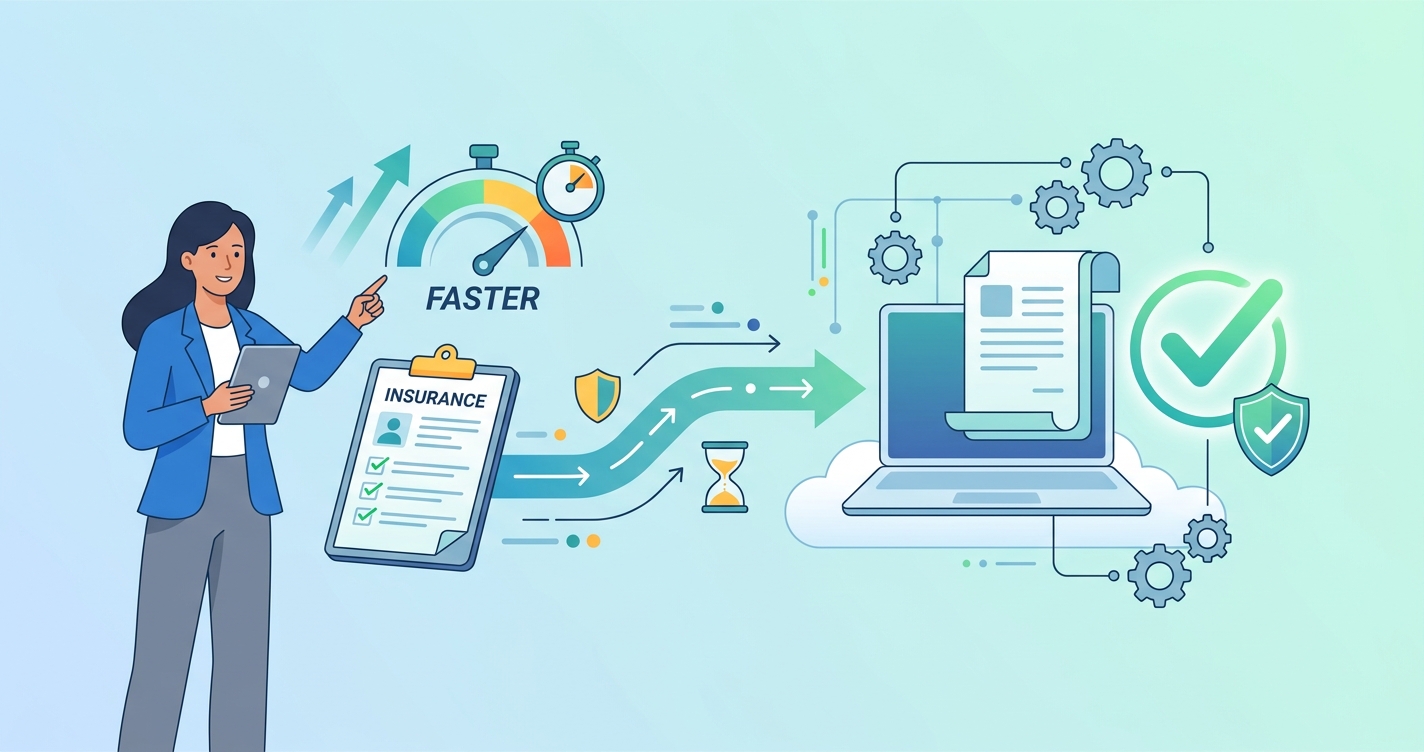
If you are searching for instant decision life insurance, the honest answer is a little less glamorous than the ads make it sound. Most people do not unlock speed by finding a secret carrier. They unlock it by fitting inside a carrier's accelerated underwriting rules. When the requested face amount, age, disclosures, prescription history, identity checks, and third-party records all line up, the case can move in minutes or hours. When they do not, the application usually falls out of the instant lane and into a slower review.
Lisa Seeman and Katy Herzog of Munich Re Life US wrote in their 2024 mortality slippage study that accelerated underwriting programs showed average slippage in the 10% to 15% range, with higher trends for males, older issue ages, and lower face amounts. That helps explain why carriers do not hand out instant decisions indiscriminately.
Why instant decision life insurance is really an accelerated underwriting question
Instant decision life insurance is usually the narrowest version of accelerated underwriting. The carrier is not skipping risk review. It is compressing it.
A modern digital application may check identity, MIB records, prescription history, motor vehicle data, claims data, and sometimes electronic health records before a human underwriter ever touches the file. If those signals are clean, the carrier can return a fast decision. Gen Re's 2025 U.S. Individual Life Next Gen Underwriting Survey reported that 59% of individual life applications qualified for an accelerated path, which tells you two things at once: the fast lane is now mainstream, and it is still selective.
That selectivity matters for shoppers. A carrier can market instant decision life insurance while still sending a large share of applicants into manual review. The promise is really this: if your evidence is easy to read, the insurer may not need fluids, attending physician statements, or a long back-and-forth.
What usually gets someone through the instant lane
Most carriers are not looking for perfection. They are looking for a low-friction file.
The applicants most likely to receive an instant or near-instant decision usually have:
- Age inside the carrier's preferred accelerated range
- A moderate face amount instead of a very large policy request
- Straightforward prescription history
- No recent major cardiac, cancer, or complex chronic-condition treatment
- Consistent answers across the application and third-party records
- A product type built for fluidless or accelerated processing
That is why the consumer question often has an oddly operational answer. You do not "hack" instant decision life insurance. You fit the underwriting design.
Comparison table: what shoppers usually mean by instant decision life insurance
| Path | Typical timing | Evidence used | Who tends to fit | Why cases get referred |
|---|---|---|---|---|
| Instant-decision path | Minutes to same day | Identity, Rx history, MIB, application data, fraud checks | Younger or middle-age applicants with cleaner records and moderate coverage amounts | Data mismatch, medical flags, higher face amount, identity friction |
| Accelerated underwriting | Same day to several days | Rx, MIB, MVR, claims, sometimes EHRs, plus application data | Low-to-moderate risk applicants who meet wider eligibility criteria | Borderline risk signals, incomplete digital evidence, product rules |
| Traditional underwriting | Several days to weeks | Full underwriting evidence, possibly labs, exam, APS, manual review | Older, larger, or more medically complex cases | This is the default route when extra evidence is needed |
For most shoppers, instant decision life insurance is just the fastest slice of a broader accelerated program.
What carriers are checking behind the scenes
This part is not especially romantic, but it is the part that determines whether a case moves fast.
Prescription and medical history signals
Prescription history is often one of the first things a carrier reviews because it can reveal treated conditions quickly. A clean script file does not guarantee approval, but a complicated one often triggers follow-up.
MIB inconsistency checks
MIB describes itself as a specialty consumer reporting agency for insurers. In plain English, it helps carriers spot omissions, inconsistencies, and prior disclosure patterns that do not match the current application. That is a big deal in accelerated underwriting because the whole model depends on the carrier trusting digital evidence without ordering every traditional requirement.
Face amount and age rules
Even healthy applicants can miss the instant lane if they are applying for more coverage than the carrier is willing to automate. The same goes for older issue ages. This is not necessarily a judgment on the applicant. It is how carriers control mortality risk and referral volume.
Electronic health records and claims data
Electronic health records are becoming more important because they give carriers a way to confirm disclosures without reverting all the way back to full underwriting. Munich Re reported results from a 525-application study showing that adding EHRs improved immediate decision rates and reduced risk-assessment costs by 35%. That is one reason more carriers are treating EHR access as part of the accelerated stack rather than a niche add-on.
Why some apparently simple cases still get kicked out
This is the part consumers find maddening. Two people can look similar on the surface and get very different experiences.
Seeman and Herzog's work at Munich Re helps explain why. Their 2024 mortality slippage analysis found that accelerated programs can behave differently by sex, age, and face amount band. A case that feels simple to the applicant may sit in a segment where the carrier has learned to be more cautious.
A few common triggers can move a file out of the instant lane:
- Large requested coverage amount
- Recent specialist visits or unresolved follow-up care
- Tobacco ambiguity
- Medication combinations that suggest more serious underlying risk
- MIB or identity records that do not match the application cleanly
- Need for EHR retrieval or attending physician statement review
So when someone asks, "How do I actually get instant decision life insurance?" the practical answer is this: you need a case that stays boring after the data checks begin.
Industry applications: why carriers keep pushing faster decision models
Consumers care about convenience. Carriers care about economics.
Distribution and placement
LIMRA's reporting on accelerated underwriting has consistently pointed to speed as a placement advantage. Its published comparisons found traditional underwriting programs averaging about 27 to 28 days for a final decision, versus about 9 days for accelerated or automated programs. That gap matters because every extra week gives an applicant time to disappear, delay, or buy elsewhere.
Underwriting capacity
Faster triage lets underwriting teams spend more time on the difficult files. Straightforward cases can be handled with structured evidence and rules engines; the complicated ones can go to human review. Carriers do not talk about this much in consumer ads, but it is one of the reasons accelerated underwriting keeps expanding.
Reinsurance confidence
Reinsurers care less about marketing language and more about whether the fast path is creating durable mortality results. That is why studies such as the Seeman-Herzog slippage work get so much attention. If carriers widen acceleration too aggressively, they can win speed and lose pricing discipline.
Current research and evidence
The evidence base behind instant decision life insurance is no longer thin.
Gen Re's 2025 survey is probably the clearest public snapshot of where the market stands. More than half of applications now qualify for an accelerated path, which means instant and near-instant decisioning are no longer fringe experiments.
Munich Re's 2024 mortality slippage study, authored by Lisa Seeman and Katy Herzog of Munich Re Life US, is useful because it puts guardrails around the hype. Their reported slippage range of roughly 10% to 15%, along with higher trends in certain segments, explains why instant issue messaging does not translate into universal instant approvals.
LIMRA's published timing comparisons make the consumer value proposition obvious. Traditional workflows can take close to a month for a final decision, while accelerated programs can bring that down to around nine days on average. That is not always "instant," but it is meaningfully different.
MIB's role is quieter but central. Accelerated underwriting works only if carriers can catch inconsistencies quickly. MIB is one of the tools that helps them do that.
These findings line up with two related posts on this microsite: Full Underwriting vs Accelerated Underwriting: When to Use Each Path and Instant Issue Life Insurance Tech: 6 Architecture Patterns That Scale.
The future of instant decision life insurance
I do not think the market is heading toward universal instant approval. That was always more slogan than strategy.
What seems more likely is smarter sorting. Carriers will get better at identifying which cases deserve a truly instant answer, which cases should stay in a same-day accelerated flow, and which ones need deeper review early instead of after a week of false hope.
That is where real-time biometric screening enters the picture. If an insurer can add current physiological evidence to the application flow, it gets a more direct signal than questionnaires alone can provide. Solutions like Circadify are being built around that idea: give payers and insurance teams another source of objective evidence without bringing back the old fluid-heavy process.
For consumers, the likely outcome is not that every application becomes instant. It is that the process becomes less random. Cleaner cases move faster. Borderline cases get rerouted sooner. And the carrier has a better shot at making a fast decision it can live with.
Frequently Asked Questions
Can I guarantee an instant life insurance decision?
No. You can choose carriers and products that support accelerated underwriting, but the final speed still depends on your age, face amount, disclosures, and what the data checks show.
Does instant decision life insurance always mean no medical exam?
Usually, but not always. Many instant-decision paths are designed to be fluidless. If a carrier sees something it wants to verify, the case can still move into a traditional path with added requirements.
Why would a healthy person still miss the instant lane?
Because carriers are not only judging apparent health. They are also judging data confidence, requested coverage amount, age band, product rules, and whether records line up cleanly.
Are carriers making instant decisions with less reliable information?
They are often making decisions with fewer traditional requirements, not necessarily with no information. Accelerated models rely on structured third-party data, and carriers monitor slippage carefully to decide how wide those models can safely run.
If you want a deeper look at the mechanics behind faster underwriting, start with Biometric Data vs Questionnaires: Why Real Data Wins in Underwriting and Fluidless Underwriting Programs That Work: 2026 Examples.