
What happens to my data after an insurer scans my face?
A growing number of insurance applicants are being asked to scan their faces to get a quote. We explore insurance face scan data privacy and the journey your data takes.
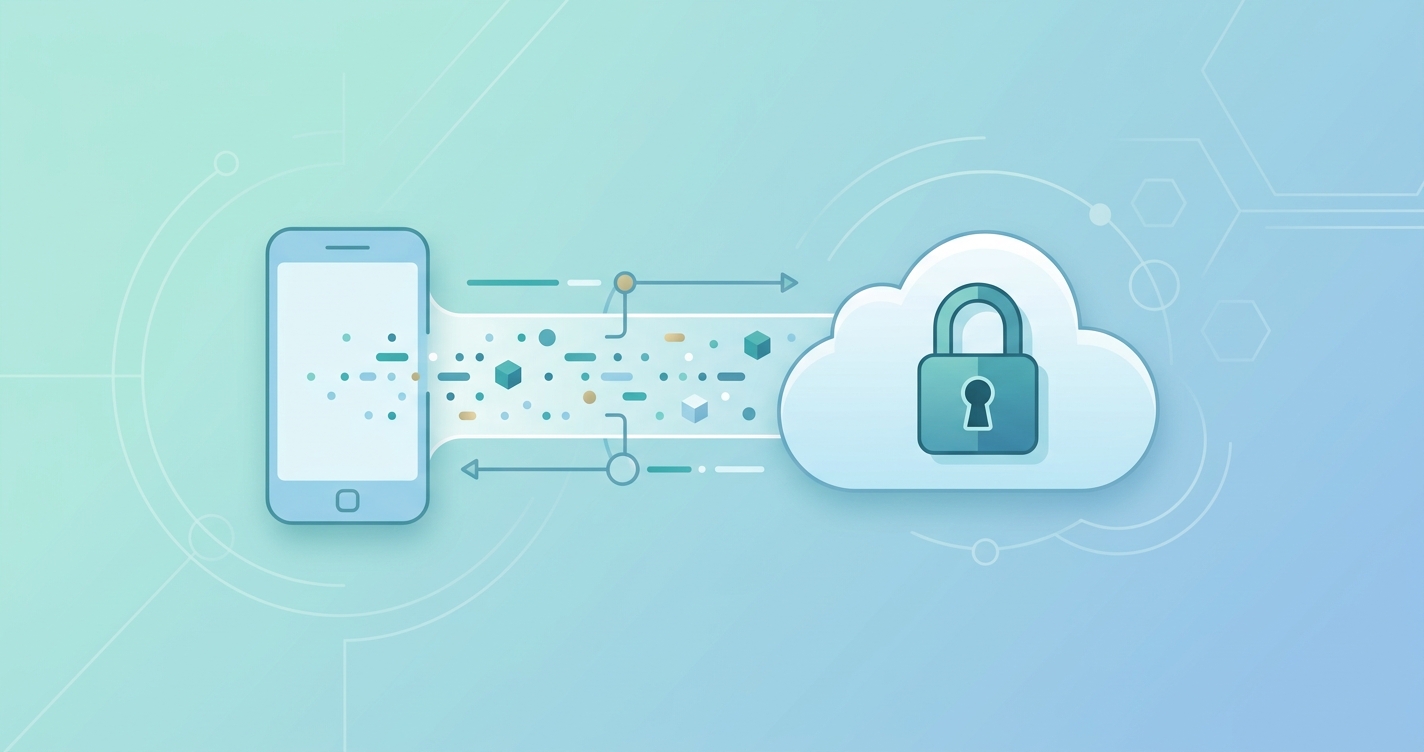
When you apply for life insurance, the process increasingly involves your smartphone. An application may ask you to look into your phone's camera for 30 seconds to capture health data. For many applicants, this raises an immediate and important question: what happens to the data from that scan? In an era of constant data breaches and privacy concerns, understanding the journey of your most sensitive information is not just reasonable; it's essential. The reality of insurance face scan data privacy is often more secure and structured than the traditional, paper-based processes it replaces.
"According to a 2024 analysis reported by Security Magazine, consumer trust in companies securing their biometric data dropped significantly in recent years, with one survey showing a fall from 28% in 2022 to just 5% in 2024."
The data journey: from scan to secure storage
When an insurer's application initiates a facial scan, it is not recording a video or storing a picture of your face. Instead, the technology uses a technique called remote photoplethysmography (rPPG), which analyzes light reflected from the skin to measure blood flow patterns. From these patterns, algorithms can derive physiological indicators like heart rate, heart rate variability, and other vital signs.
The journey of this data is governed by strict security and compliance protocols, designed to protect both the consumer and the carrier. Here's a typical, compliant data flow:
- Step 1: Ephemeral Analysis: The video stream from your camera is analyzed on-device or in a temporary, secure processing environment. The raw video is never permanently stored.
- Step 2: Data Extraction and Conversion: The rPPG analysis extracts key physiological signals, which are converted into a set of numerical data points. Your facial likeness is discarded; only the anonymized health metrics are retained.
- Step 3: Encryption and Tokenization: Before the numerical data is transmitted from your device, it is encrypted. In many advanced systems, the data packet corresponding to your application is also tokenized. This replaces the raw data with a non-sensitive token, which acts as a reference to the data without containing the data itself.
- Step 4: Secure Transmission: The encrypted data is sent to a secure cloud environment using transport layer security (TLS 1.2 or higher), the same protocol that protects online banking and financial transactions.
- Step 5: Compliant Storage: The data lands in a segregated, highly secure cloud storage environment that is compliant with regulations like HIPAA and SOC 2. Access is strictly controlled through Identity and Access Management (IAM) roles, multi-factor authentication, and continuous audit logs.
This entire process is designed to ensure robust insurance face scan data privacy, separating an applicant's identity from their health data and protecting it with multiple layers of security.
| Feature | Traditional Underwriting Data | Modern Biometric Data Pipeline |
|---|---|---|
| Format | Paper forms, faxes, PDF of medical records | Encrypted numerical data points, tokenized results |
| Transmission | Postal mail, fax machines, unsecure email attachments | Encrypted API calls via TLS 1.2+ protocols |
| Storage | Physical filing cabinets, local on-premise servers | Segregated, HIPAA-compliant cloud storage with immutable logs |
| Access Control | Manual access logs, physical keys, shared network drives | Granular IAM roles, multi-factor authentication, automated audit trails |
| Auditability | Periodic, manual, and often prone to human error | Continuous, automated, and provides real-time compliance checks |
Building a chain of trust
A well-architected data pipeline isn't just a technical requirement; it's the foundation of trust for every stakeholder in the insurance ecosystem. For carriers, demonstrating control over data handling is crucial for winning over both privacy-conscious consumers and risk-averse reinsurers.
Meeting regulatory requirements
Insurers operate under a complex web of data privacy regulations. In the United States, the Health Insurance Portability and Accountability Act (HIPAA) sets the standard for protecting health information. When biometric data is used to determine an individual's health status, it becomes Protected Health Information (PHI). This requires carriers and their technology partners to sign Business Associate Agreements (BAAs) and implement HIPAA's required technical, physical, and administrative safeguards. State-level laws like the Illinois Biometric Information Privacy Act (BIPA) and the California Consumer Privacy Act (CCPA) add further obligations around consent, disclosure, and data deletion.
Earning applicant trust
The precipitous drop in consumer trust regarding biometric data security means carriers must be proactive and transparent. The best practice is to provide clear, plain-language consent forms that explain what data is being collected, how it will be used, and how it is protected. By explaining that a secure digital process replaces the insecure alternative, mailing or faxing paper medical records, carriers can reframe the conversation from one of risk to one of enhanced security.
Satisfying reinsurer audits
Reinsurers that back accelerated underwriting programs must have complete confidence in the data they are using to price risk. Reinsurer audits are increasingly focused on data security, model governance, and compliance. A carrier using facial scanning technology must be able to produce documentation of its data pipeline, security controls, and compliance certifications like SOC 2 reports. The ability to demonstrate an auditable, transparent, and secure data flow is no longer a "nice to have"; it is a prerequisite for building a successful program and securing reinsurer capacity.
Current research and evidence
The tension between the convenience of biometrics and privacy concerns is a subject of significant industry research. While consumers use facial recognition to unlock their phones dozens of times a day, they express hesitation when asked to use it for financial services. A 2023 report by Verisk on the future of underwriting noted this paradox, emphasizing that carrier transparency is the key to bridging the gap. Research from institutions like the National Institute of Standards and Technology (NIST) continues to refine the standards for biometric data management, providing a framework for responsible innovation. The consensus is clear: the technology itself is less of a barrier to adoption than the trust required to deploy it.
The future of insurance data privacy
The field of insurance face scan data privacy is continuously evolving to offer even stronger protections. Emerging technologies promise a future where data can be used for risk assessment without ever being directly exposed. Techniques like federated learning allow AI models to be trained on decentralized data, meaning the raw data never has to leave the user's own device. Another promising area is zero-knowledge proofs, a cryptographic method by which one party can prove to another that they know a value, without conveying any information apart from the fact that they know the value. These advancements could one day make it possible to underwrite a policy based on a health assessment without the insurer ever seeing the underlying data itself.
Frequently asked questions
What specific data is collected during an insurance face scan? The scan does not collect or store your photo or video. The technology analyzes the light reflected from your skin to measure physiological signals like heart rate and blood flow patterns. These are then converted into numerical health indicators that are used for the risk assessment.
How is my biometric data protected from hackers? It is protected through multiple layers of security. This includes end-to-end encryption (both in transit and at rest), data tokenization, and storage in secure, HIPAA-compliant cloud environments. These environments feature strict access controls and are subjected to continuous monitoring and third-party audits.
Can I ask the insurance company to delete my data? Yes. Under privacy regulations like Europe's GDPR and California's CCPA, you have the "right to be forgotten," which allows you to request that a company delete your personal data. These requests are subject to the insurer's own legal and regulatory obligations to retain data for a certain period for audit and actuarial purposes.
Who actually owns the data from the scan? As the data subject, you maintain ownership rights over your personal data. When you provide consent, you are granting the insurer a license to use that data for the specific and limited purpose of assessing your application for insurance. The consent form you sign should explicitly detail this scope.
As carriers adopt new sources of health data, the need for secure, compliant, and transparent data pipelines has never been more critical. Circadify is at the forefront of this evolution, engineering systems that build trust between applicants, carriers, and their reinsurance partners. To learn more about how to implement a compliant digital underwriting strategy, explore our resources at circadify.com/industries/payers-insurance.