
At 35, can I get life insurance approved quickly based on my health apps?
A look at how life insurance with health data drives faster approvals at age 35, and what actuarial teams need to model before automating underwriting.
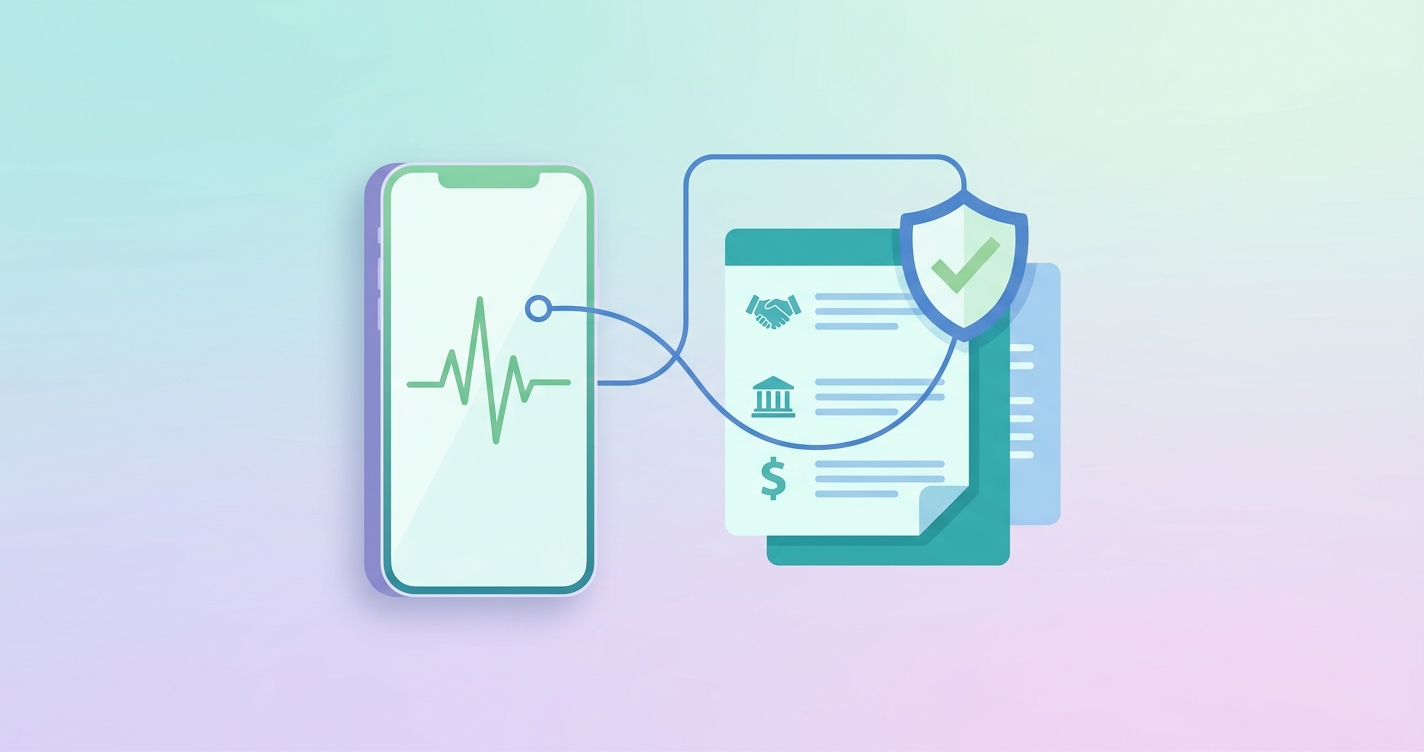
A healthy 35-year-old applies for term coverage on a Tuesday evening, taps through a phone-based flow, and expects a decision before bed. That expectation is now the design target for most carriers building accelerated programs, and it reframes a question underwriting leaders hear constantly: can life insurance with health data actually approve a younger applicant in minutes, or is the speed mostly marketing? The honest answer for actuarial teams and chief underwriting officers is that the technology to do it exists, but the decision to do it rests on whether the data feeding the model carries enough signal to defend the mortality assumptions behind an instant offer.
For a 35-year-old, the math is unusually favorable. Mortality at that age is low, the variance between standard and preferred classes is narrow, and the cost of a misclassification on a modest face amount is contained. That combination is exactly why this cohort became the proving ground for fluidless and instant-issue pathways. The harder work is happening on the data side, where carriers are deciding which app-sourced and biometric inputs deserve to influence a risk class.
A 2024 Gen Re survey of U.S. individual life carriers found that only 7 percent of companies were evaluating wearable activity data for accelerated underwriting, down from 16 percent in 2022, signaling that interest has outpaced operational adoption.
What life insurance with health data actually means for a fast decision
When applicants picture approval "based on my health apps," they imagine a carrier reading their step counts and resting heart rate directly off a phone. The reality inside an accelerated program is more layered. Life insurance with health data refers to a stack of inputs the system pulls and scores in sequence: prescription histories, the MIB, motor vehicle records, electronic health records, and, increasingly, biometric or behavioral signals captured at the point of application. App-derived data sits at the newer end of that stack, and its weight in the final decision varies widely by carrier.
The speed comes from automation, not from any single data source. An underwriting engine evaluates an applicant against a rules tree, assigns a preliminary class, and routes clear cases straight through while flagging ambiguous ones for review. For a 35-year-old with clean Rx and MIB results, that path can resolve in minutes. Health-app and biometric data influence the decision in two ways: confirming a favorable profile that justifies a preferred class, or surfacing a discrepancy that sends the file to a human underwriter.
The strategic question for actuarial teams is not whether the data can be collected quickly. It is whether each source adds protective value beyond what the existing waterfall already captures. Adding a signal that correlates heavily with prescription data, for instance, lengthens the process without sharpening the risk estimate.
Here is how the main data sources compare on the dimensions that matter to a fast-decision program.
| Data source | Decision speed | Mortality signal strength | Anti-selection resistance | Best fit at age 35 |
|---|---|---|---|---|
| Application questionnaire | Instant | Low to moderate | Weak (self-reported) | Baseline screen |
| Prescription (Rx) history | Seconds | High | Strong | Core knockout layer |
| MIB and MVR | Seconds | Moderate | Strong | Fraud and behavior check |
| Electronic health records | Minutes to days | High | Strong | Confirmatory, variable availability |
| Wearable activity data | Real time | Moderate, emerging | Moderate | Preferred-class refinement |
| Point-of-sale biometric capture | Under a minute | Moderate to high | Strong | Fluidless vitals substitute |
The table makes the design tension visible. The fastest, most defensible sources are already standard. The newer app and biometric inputs promise richer physiology but carry open questions about consistency and gaming, which is why most carriers use them to refine rather than to decide.
- Rx and MIB remain the backbone because they are fast, hard to manipulate, and well correlated with mortality.
- Wearable and app data are strongest as confirmatory signals for applicants already trending toward preferred.
- Point-of-sale biometric capture appeals to carriers seeking a fluidless substitute for paramedical vitals.
- Self-reported app data without verification reintroduces the anti-selection problem that accelerated programs were built to reduce.
Industry applications of underwriting automation health data
Preferred-class refinement for younger applicants
For the 35-year-old cohort, the commercial value of app and wearable data is concentrated in separating standard from preferred. Research on physical activity signals supports this use. A study published by Munich Re on next-generation underwriting data described how step-count and activity metrics segment mortality risk even after controlling for age, sex, and smoking status, which is precisely the kind of incremental lift that matters when applicants already look healthy on paper.
Fluidless and instant-issue substitution
Carriers running fluidless programs use biometric capture to replace the information a blood draw once provided. The goal is not to reproduce a lab panel but to gather enough physiological signal, combined with the data waterfall, to support an instant offer within a defined face-amount band. For a younger applicant, this band is typically wide, because the protective value of fluids at low mortality ages is modest relative to the friction they introduce.
Triage and routing
Even when app data does not drive the final class, it improves routing. A system can use activity and behavioral signals to decide which clean-looking files are safe to auto-issue and which warrant a second look, reducing both straight-through error rates and unnecessary manual review. This triage function is often the most defensible early use of new data for reinsurer-facing programs.
Current research and evidence
The evidence base for wearable and activity data has matured faster than carrier adoption. Analysis of UK Biobank participants using explainable artificial intelligence found that wearable-derived activity features predicted all-cause mortality with strong discrimination, and researchers reported that higher-risk subjects carried a hazard ratio above 2 relative to low-risk peers. That magnitude of separation is meaningful for risk classification, though the cohort skews older than the 35-year-old applicant most instant-issue programs target.
At the same time, the Gen Re 2024 U.S. survey shows adoption moving in the opposite direction of the research enthusiasm, with wearable evaluation dropping to 7 percent of carriers. Munich Re's accelerated underwriting trends work attributes much of this gap to operational friction: data standardization, consent and privacy handling, and the difficulty of building actuarial credibility from inputs that policyholders control. The Society of Actuaries has separately documented mortality slippage risk in accelerated programs, a reminder that any new fast-path data source needs monitoring against actual experience before it earns a place in pricing.
The result is a market where the protective value of biometric data is increasingly accepted in principle, but the burden of proof for putting it into an automated decision remains high. That is the correct posture for a function where a small misclassification at scale compounds into real mortality cost.
The future of life insurance with health data
Three shifts will shape the next phase. First, biometric capture at the point of application is likely to displace self-reported app data, because verified physiology resists anti-selection in a way that user-controlled metrics do not. Second, continuous underwriting, where a policy reprices or rewards based on ongoing data, will move from pilot to selective production, though regulatory and consent frameworks will gate its pace. Third, actuarial teams will demand explainability as a precondition, not an afterthought, so that any signal influencing a class can be defended to a reinsurer and a regulator.
For the 35-year-old applicant, the practical trajectory is clear: approvals will keep getting faster, and the data behind them will keep getting richer. But the carriers that win will be the ones that treat new health data as something to validate against experience, not something to bolt on for marketing speed.
Frequently asked questions
Can a 35-year-old really get approved in minutes using health-app data? Yes, for many clean profiles. Low mortality at that age, combined with strong Rx and MIB results, lets automated engines auto-issue within defined face-amount bands. App and biometric data usually refine the class rather than make the decision on their own.
Does wearable data lower the premium? It can, when it supports a preferred class an applicant would not otherwise reach. Research shows activity metrics segment mortality risk, but most carriers currently use this data confirmatorily rather than as a standalone pricing input.
Why are carriers cautious about app data if the research is positive? Because applicants control self-reported app data, which reintroduces anti-selection risk. Actuarial teams also need credible experience to justify pricing, and survey data shows wearable adoption actually declined between 2022 and 2024 despite strong study results.
Is biometric capture better than connecting my fitness app? For underwriting integrity, verified point-of-sale biometric capture tends to be more defensible than self-reported app feeds, because it is harder to game and produces more consistent physiological signal.
Circadify is working in exactly this space, helping carriers build accelerated and fluidless pathways on verified biometric data rather than questionnaires alone. Actuarial teams and chief underwriting officers evaluating underwriting automation health data can review the technical whitepapers and actuarial datasets at circadify.com/industries/payers-insurance.