
How do I buy life insurance without a blood test or needles?
The underwriting industry is shifting from invasive fluid collection to contactless biometric scans. Learn how life insurance without a blood test is possible through new technology.
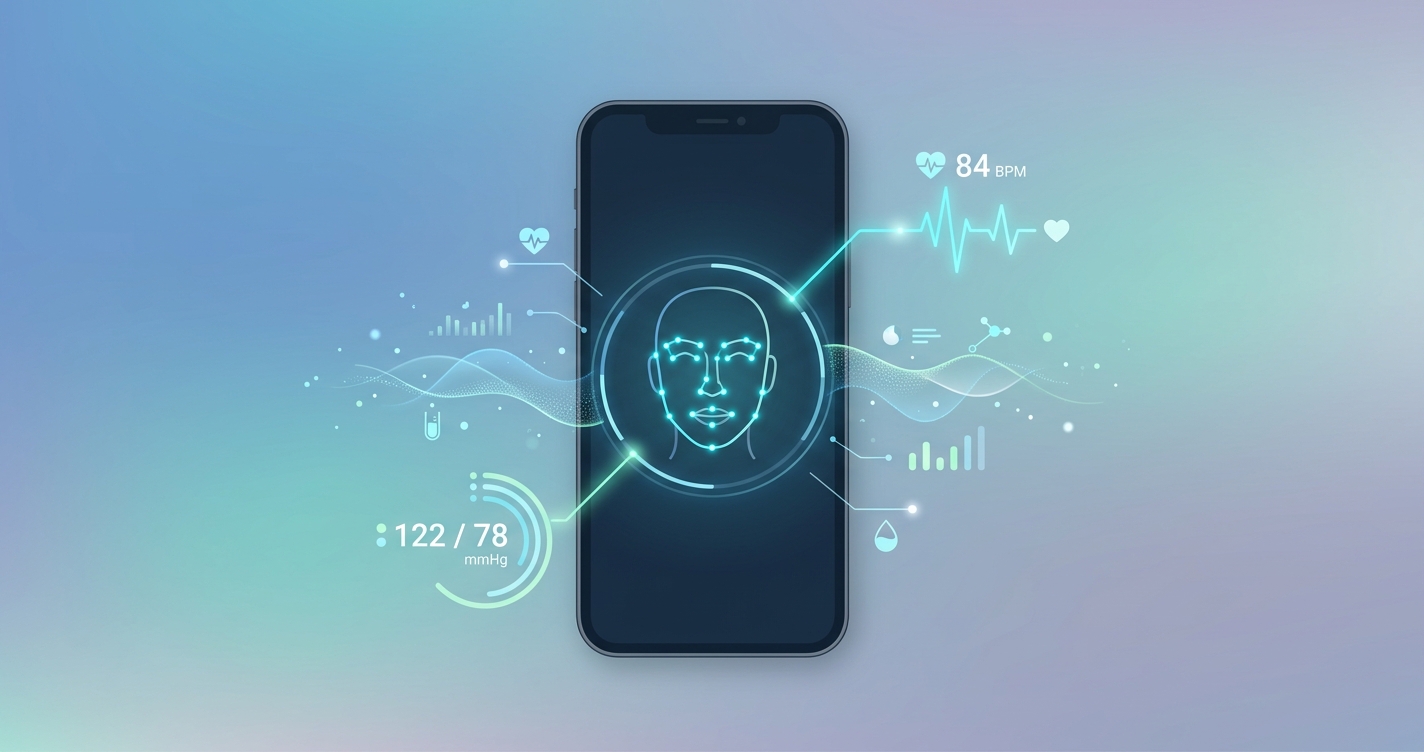
For decades, the process of buying life insurance was inseparable from needles and medical exams. The industry built its risk models on a foundation of blood panels, urine samples, and paramedical professionals visiting applicants' homes. While effective for risk assessment, this model is increasingly at odds with consumer expectations for fast, non-invasive digital experiences. Today, the question is no longer if carriers can offer life insurance without a blood test, but how they can do so while maintaining actuarial soundness. The answer lies not in eliminating data, but in capturing better, more immediate data through contactless technology.
"A recent survey by the Reinsurance Group of America (RGA) found that over 60% of respondents were willing to use photoplethysmography (PPG) for health monitoring, and half were interested in sharing that data for underwriting purposes to potentially lower their premiums."
The shift to fluidless, biometric-based underwriting
The term life insurance without blood test has often been associated with "simplified issue" products that rely heavily on application questionnaires and third-party data sources like the Medical Information Bureau (MIB) and prescription history (Rx) databases. While faster, this approach often leads to conservative pricing and lower coverage limits to buffer the insurer against undisclosed risks. The true innovation is the move toward fluidless underwriting powered by objective biometric data, which allows for robust risk assessment without invasive procedures.
The core technology enabling this shift is remote photoplethysmography (PPG), a technique that uses a smartphone's camera to detect minute changes in light reflection from the skin. These changes correspond to the volumetric shifts in blood vessels caused by the cardiac cycle. In a scan lasting as little as 30 seconds, advanced algorithms can extract key physiological signals, including:
- Heart Rate
- Heart Rate Variability (HRV)
- Blood Pressure
- Oxygen Saturation (SpO2)
- Respiratory Rate
This data provides a real-time, objective snapshot of an applicant's cardiovascular health, substituting the insights once gleaned exclusively from blood draws and physical exams. It replaces subjective applicant disclosures with verifiable physiological measurements, allowing underwriters to price risk with greater confidence.
| Feature | Traditional Full Underwriting | Fluidless Biometric Underwriting |
|---|---|---|
| Primary Data Source | Blood, urine, paramedical exam, APS | Remote PPG scan, MIB, Rx, application data |
| Applicant Experience | In-person exam, fluid collection | 30-60 second scan on personal device |
| Time to Decision | 30-60 days | Minutes to a few days |
| Data Type | Lab values, physical measurements | Real-time physiological signals |
| Cost Basis | High (exam, labs, underwriter time) | Low (automated, minimal human touch) |
| Coverage Limits | Highest available | High, approaching traditional limits |
Industry applications of contactless health data
Forward-thinking carriers are integrating contactless health scans into their accelerated underwriting (AU) pathways. Instead of a simple "yes/no" decision based on a questionnaire, the biometric data creates a more nuanced "triage" process.
Intelligent underwriting workflows
- Fast-Track Approvals: Applicants with excellent biometric readings can be instantly approved for significant coverage amounts, bypassing the need for any further review.
- Data-Driven Triage: When an applicant's data falls into a "gray area," the system can automatically trigger a request for specific, targeted evidence rather than defaulting to a full medical exam. For example, an elevated blood pressure reading might trigger a request for a follow-up, while other metrics remain valid.
- Reducing Not-Taken-Rates: The speed and convenience of a contactless process dramatically reduce applicant drop-off. The friction of scheduling exams and waiting for weeks is a primary driver of not-taken policies, a costly problem that this technology helps solve.
Current research and evidence
The transition to biometric data is supported by a growing body of scientific research, though it is not without challenges. The core question for actuaries and underwriters is one of validation: how accurate is a PPG-based measurement compared to the established "gold standard" of a sphygmomanometer (blood pressure cuff) or an electrocardiogram?
Researchers are actively studying the accuracy of these methods. A 2023 systematic review published in the journal Hypertension by a team including lead author Stefano Masi evaluated numerous studies on wearable and cuffless blood pressure devices. The findings indicate that while the technology is promising, accuracy can vary. The researchers noted that many devices require individual calibration to achieve clinical-grade results.
Another systematic review and meta-analysis published in 2023 in the Journal of Human Hypertension found that while many PPG-based devices performed well, some exhibited deviations from traditional cuff-based measurements. Factors such as skin tone, motion artifacts, and device positioning can influence the quality of the signal. Ongoing research is focused on developing more sophisticated algorithms that can account for these variables and improve raw signal quality. This is where the true value lies, not just in the sensor, but in the analytical software that interprets the data.
The future of life insurance without blood test
As contactless biometric technology matures, its role in insurance will expand. The current focus is on replacing a single, static medical exam at the point of application. The future may involve more dynamic relationships between the insurer and the insured. Policyholders could be rewarded for positive health trends captured through periodic, voluntary scans, creating a more proactive and personalized form of insurance. For underwriters, this technology represents a move away from interpreting historical records toward assessing present, objective health. The challenge and opportunity lie in building the actuarial models that can accurately price risk based on this new, richer data stream.
Frequently asked questions
Is life insurance without a blood test as good as traditional insurance? For many applicants, yes. Policies underwritten with contactless biometric data can offer significant coverage amounts with competitive pricing, as the technology provides a robust alternative to fluid-based risk assessment. However, the largest face amounts (e.g., $10M+) may still require traditional evidence, and eligibility depends on the carrier's specific underwriting rules.
What specific data does a 30-second health scan collect? The scan uses a smartphone camera and light to capture a video of the user's face. Algorithms then analyze the light reflected from the skin to detect blood flow patterns. From this, it derives vital signs like heart rate, heart rate variability, blood pressure, oxygen saturation, and respiratory rate, which are key indicators of cardiovascular health.
How is the technology validated for accuracy? Validation is a critical, ongoing process. The technology is benchmarked against traditional medical devices in clinical settings. Research, such as studies published by the American Heart Association, continuously evaluates the accuracy of cuffless blood pressure monitors. Insurers and technology providers must ensure their algorithms are trained on diverse populations to minimize bias and account for factors like skin tone and age.
Why are underwriters moving away from blood tests if they are so accurate? The move is driven by multiple factors. Blood tests are expensive, create significant logistical friction for the applicant, and slow down the application process, leading to high drop-off rates. While accurate, they only provide a single point-in-time measurement. Contactless scans offer a cost-effective, applicant-friendly alternative that provides medically relevant data in minutes, improving efficiency and the customer experience.
As the industry leader in biometric and contactless health data solutions, Circadify is at the forefront of this transformation. We provide the technology and data insights that enable carriers to build fluidless, data-driven underwriting programs that are both profitable and consumer-friendly. To learn more about how to implement a fluidless underwriting solution, explore our resources for insurers at circadify.com/industries/payers-insurance.