
How are insurers pricing risk with only 30 seconds of health data?
Insurers are now using 30-second health data captures from smartphone cameras to price risk for instant-issue policies. Learn how this new biometric data stream is changing underwriting.
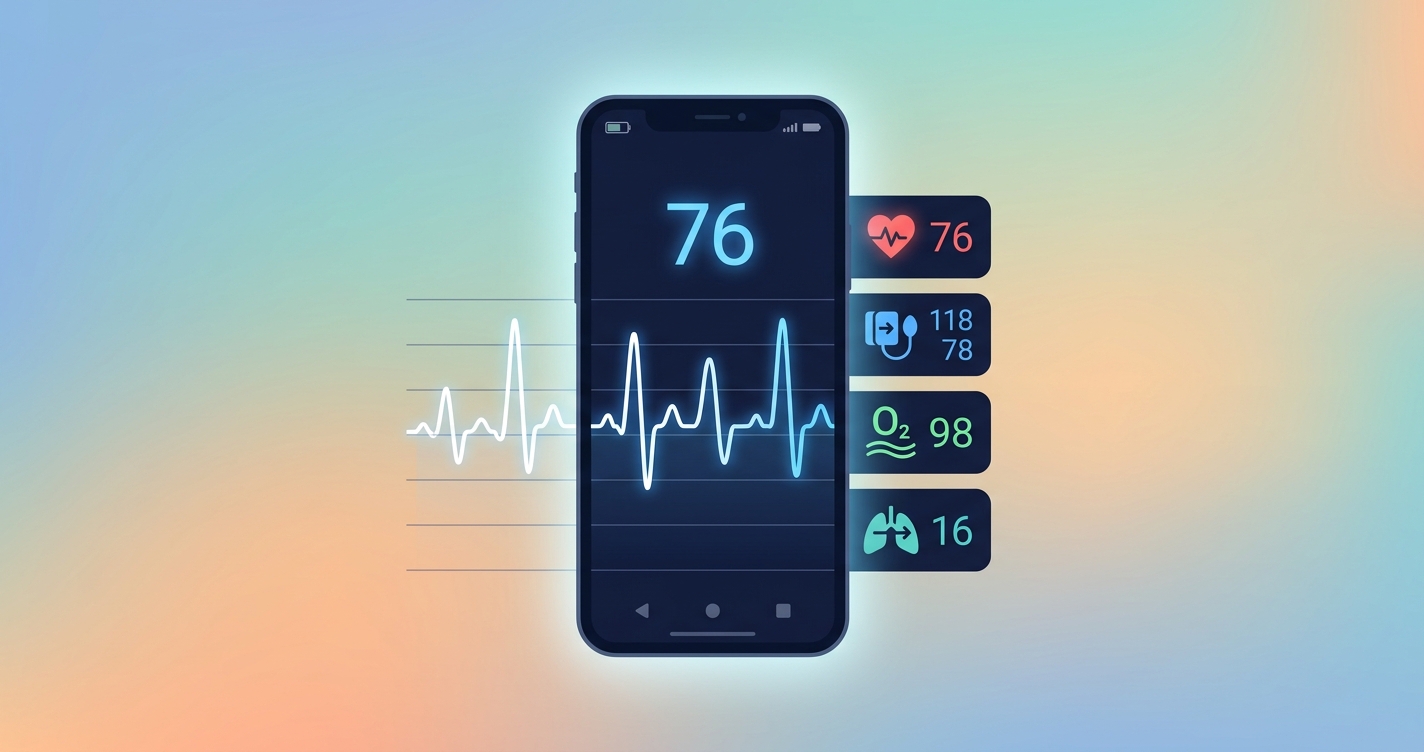
The rise of "instant-issue" life insurance has been driven by a simple premise: use data to make a decision in minutes, not weeks. For years, this meant relying on questionnaire data and third-party database checks. But a new generation of technology is changing the equation, allowing carriers to collect real biometric signals in the time it takes to fill out a form. The core question for insurers and consumers alike is how this new data stream impacts risk assessment. This analysis explores how carriers approach insurance pricing with 30 seconds of health data, a practice moving from theoretical to table stakes for accelerated underwriting programs.
"Our 2023 global survey showed that nearly two-thirds of consumers are open to using camera-based health assessments for underwriting if it results in a faster, more convenient experience. The actuarial challenge is not in the consumer willingness, but in validating and modeling this new, high-frequency data." - Dr. David Sim, Chief Medical Officer, a leading global reinsurance group
From application questions to biometric signals
Traditionally, accelerated underwriting has relied on a "waterfall" of data sources: the application itself, prescription history (Rx), the MIB (Medical Information Bureau) database, and public records. This model is effective at identifying clear "knock-out" criteria, but it struggles with borderline cases and provides a limited view of an applicant's current health. The process creates a proxy for health, not a direct measurement of it.
The technology enabling insurance pricing with 30 seconds of health data is remote photoplethysmography, or rPPG. This technique uses a standard smartphone camera to detect and analyze microscopic changes in skin color that correspond to blood flow. By analyzing a 30-to-60-second video of a person's face, an rPPG algorithm can extract a range of physiological signals, providing a real-time snapshot of cardiovascular health. This moves underwriting from an entirely proxy-based model to one that includes direct, albeit limited, biometric measurement.
| Data Source | Information Provided | Key Limitations |
|---|---|---|
| Traditional Full Underwriting | Paramedical exam, blood/urine samples, EKG, full Attending Physician Statement (APS). | Slow (4-8 weeks), expensive ($500+ per applicant), highly intrusive. |
| Questionnaire-Based Acceleration | Applicant disclosures, Rx history, MIB checks, motor vehicle records. | Relies on applicant honesty, data can be months or years old, poor at assessing current health. |
| 30-Second Health Scan (rPPG) | Heart Rate, Blood Pressure (Systolic/Diastolic), Heart Rate Variability (HRV), Respiration Rate, SpO2. | Limited to cardiovascular health, accuracy depends on conditions (lighting, stillness), requires new actuarial models. |
Industry Applications
The primary application for 30-second health scans is in accelerated and instant-issue life insurance funnels. Carriers are implementing this technology in several ways.
### Triage and Routing
The most common use case is as an early-stage triage tool. An applicant who completes a short scan and presents with vital signs within a standard range can be confidently routed into an accelerated, fluidless pathway. If the scan detects readings outside the desired thresholds-such as elevated blood pressure-the applicant can be seamlessly routed to a traditional underwriting path for more detailed assessment. This preserves the speed of acceleration for the majority of applicants while managing risk for outliers.
### Adjusting for "Smoker's Amnesia"
A persistent problem in underwriting is applicants who misrepresent their smoking status to get better rates. While not a direct measure of nicotine, rPPG-derived data can provide clues. Chronic smokers often exhibit different cardiovascular patterns, including higher resting heart rates and altered blood pressure readings. While not definitive, these signals can prompt an underwriter to request a cotinine test, improving risk classification accuracy.
### blended risk models
Sophisticated carriers are not simply replacing old data with new data; they are building blended models. An actuarial model might take a baseline risk score derived from traditional sources (age, gender, MIB) and then adjust it up or down based on the results of a 30-second biometric scan. A 45-year-old male applicant might look average on paper, but a 30-second scan revealing a low resting heart rate and excellent HRV could place him in a preferred risk class without the need for a full medical exam.
Current research and evidence
The use of rPPG for underwriting is supported by a growing body of research validating its accuracy against clinical devices.
- A 2023 study published in the medRxiv preprint server by researchers Ramakrishna S. and T.S. Rao evaluated a smartphone rPPG tool called the WellFie application. They found high predictive accuracy for heart rate (97.34%) and significant accuracy for systolic (93.94%) and diastolic (92.95%) blood pressure in controlled settings.
- An ongoing clinical trial (NCT07502703) is currently comparing rPPG-derived cardiovascular data against standard clinical measurements, with initial expectations of "good agreement" for heart rate and "moderate agreement" for blood pressure. This reflects the industry's cautious but optimistic approach to validating the technology.
- Research has also identified limitations. A 2023 study published on PubMed noted that the accuracy of rPPG can decrease significantly under non-ideal conditions, such as low lighting, user movement, and at elevated heart rates. This highlights the importance of controlling the user experience during data capture to ensure reliable results.
The future of 30-second health data
The integration of insurance pricing with 30 seconds of health data is still in its early stages, but its trajectory is clear. As algorithms become more refined and are trained on larger, more diverse population data, their accuracy and applicability will expand. The future may involve moving beyond basic vitals to assess things like arterial stiffness, a key marker of cardiovascular risk. Reinsurers like Swiss Re and RGA have published extensive research on the topic, signaling a top-down acceptance of these new data sources, provided the data quality is high and the models are transparent. For carriers, the ability to gather objective health data in seconds offers a powerful way to fight fraud, reduce costs, and provide a better, faster customer experience.
Frequently asked questions
1. Is a 30-second scan as accurate as a doctor's visit? Not yet, and it may not need to be. The goal of a 30-second scan in underwriting is not to provide a clinical diagnosis but to perform a risk assessment. It is highly effective for identifying applicants who fall within a standard risk profile. For borderline or high-risk cases, the system is designed to trigger a request for more detailed, traditional medical information.
2. Can I "fail" a scan without knowing why? In most modern underwriting systems, the outcome is not a simple pass/fail. If the data from a 30-second scan falls outside the parameters for an instant decision, the application is typically referred for human review or routed to a pathway that requires more information, such as a traditional paramedical exam. Regulations often require that insurers provide a reason if an application is denied, a practice known as adverse action.
3. Is my health data secure? Data security and privacy are critical. The platforms that process this data are required to be compliant with regulations like HIPAA. The video feed is analyzed by an algorithm and then typically discarded; the video itself is not stored. Only the resulting biometric data points (e.g., "Heart Rate: 65 bpm") are encrypted and passed to the underwriting engine.
4. Will this make my insurance more expensive? For most people with healthy habits, the opposite is more likely. By providing a direct measurement of your current health, you can prove your risk is lower than what a questionnaire-based model might assume. This allows carriers to offer better rates to more people without putting them through a lengthy medical exam process, reserving the highest costs for the highest-risk applicants.
As the industry leader in certified, device-agnostic biometric data capture, Circadify is at the forefront of enabling this transition. We provide the secure, reliable, and scalable infrastructure that carriers and reinsurers need to incorporate real health data into their underwriting and pricing models. To learn more about our work with leading payers and access our actuarial data sheets, visit our industry page on payers and insurance.