
Fluidless Underwriting: Phone Scan vs. Wearable Data in 2026
Compares the pros, cons, and data outputs of using smartphone camera scans versus applicant-consented wearable data for fluidless underwriting in 2026.
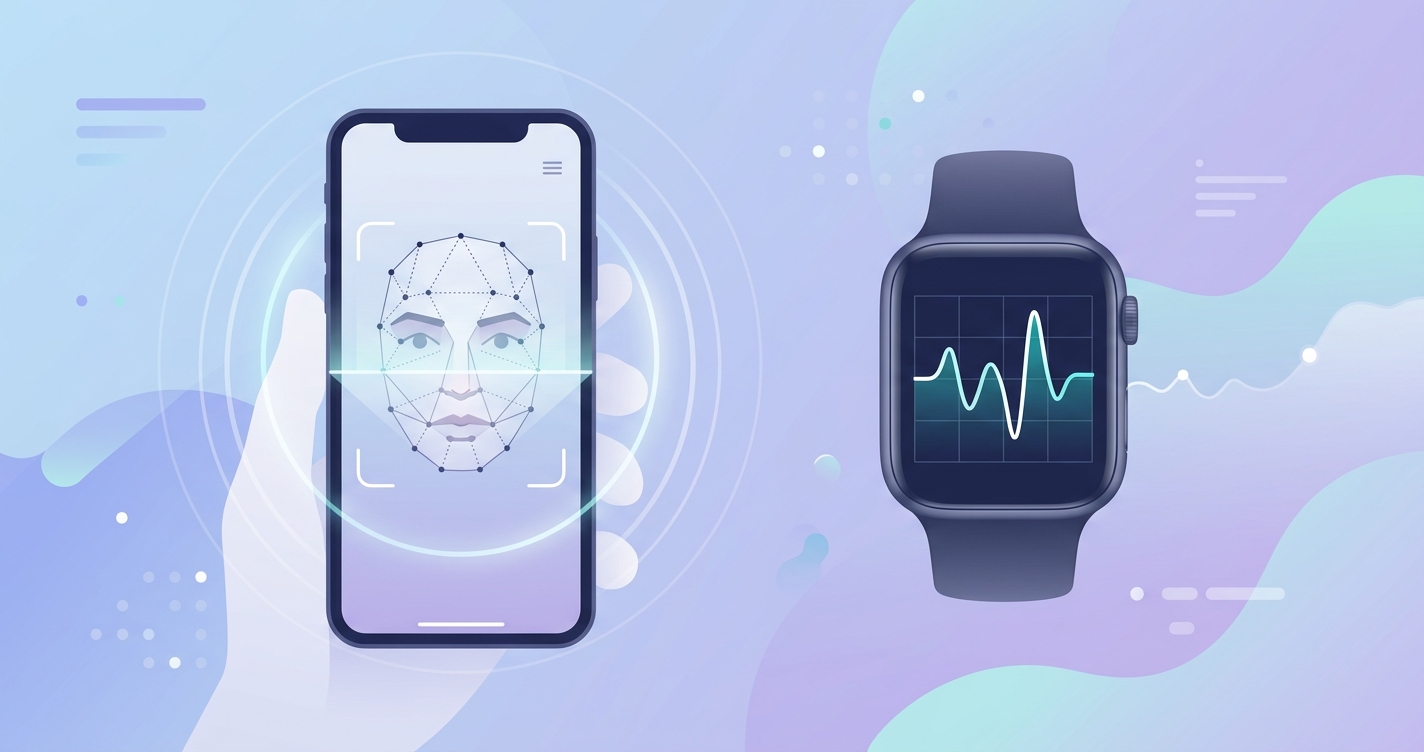
In 2026, the life insurance industry has largely accepted that medical questionnaires alone are insufficient for modern risk assessment. Relying entirely on self-disclosure leaves carriers exposed to anti-selection and forces pricing actuaries to build unnecessarily wide risk buffers. As chief underwriting officers look to optimize instant-issue pathways, the focus has shifted toward integrating verifiable physiological data without reverting to invasive blood and urine draws. Choosing the right fluidless underwriting solution now requires carriers to evaluate competing hardware-free technologies. The two primary methods emerging at the forefront of this shift are smartphone camera scans, using remote photoplethysmography (rPPG), and applicant-consented wearable data from smartwatches and fitness trackers. Both eliminate the need for paramedical exams, but they yield fundamentally different types of data, presenting actuaries with distinct modeling challenges and distinct protective values.
"Physical activity and physiological baselines measured by wearable sensors can effectively segment mortality risk, offering a predictive layer that point-in-time clinical exams often miss in fundamentally healthy populations."
- Munich Re Research Collaboration with Klarity on UK Biobank Data (2023)
Designing a fluidless underwriting solution for modern risk pools
When evaluating a fluidless underwriting solution, actuaries must reconcile two opposing forces: the consumer expectation of an instant decision and the reinsurer expectation of a fully validated mortality curve. For decades, the industry accepted a structural trade-off. A carrier could have speed through simplified issue products, or it could have objective biometric data through fully underwritten pipelines. The adoption of new biometric data sources eliminates this binary by bringing the data collection directly to the devices applicants already own.
The strategic divergence in 2026 centers on how that data is captured, structured, and priced. Smartphone scans require an applicant to look at their phone camera for 30 to 60 seconds. During this window, rPPG algorithms measure micro-fluctuations in facial skin color to estimate heart rate, respiration, and sometimes blood pressure proxies. Wearable data intake relies on an API connection where the applicant consents to share historical metrics, such as average resting heart rate, sleep duration, and daily step counts, accumulated over months or years by their personal smartwatch or fitness tracker.
For chief underwriting officers, the choice between these two approaches dictates the architecture of their data intake platform and the specific clauses negotiated in their reinsurance treaties. Reinsurers scrutinize the origin, validity, and fraud-resistance of every new data source. A biometric signal is only useful if it offers genuine protective value that outweighs the implementation cost.
| Feature | Smartphone Camera Scan (rPPG) | Applicant-Consented Wearable Data |
|---|---|---|
| Data Nature | Point-in-time (cross-sectional) vitals | Longitudinal (historical) behavioral and physiological data |
| User Friction | Moderate (requires 30-60 second scan in good lighting) | Low to Moderate (requires credential login/API consent) |
| Key Metrics | Heart rate, respiration rate, HRV proxies | Resting heart rate, step count, sleep patterns, physical activity |
| Actuarial Value | Immediate vital sign verification, acute anomaly detection | Long-term lifestyle validation, mortality risk segmentation |
| Implementation | SDK integration into carrier application flow | Data aggregator API integration |
To fully operationalize these technologies, an underwriting program must address specific architectural requirements:
- Actuarial calibration of new physiological signals against historical clinical exam data.
- User experience workflows that seamlessly integrate data capture without causing application abandonment.
- Privacy and compliance frameworks for biometric data retention and automated decision-making.
- Reinsurance treaty updates to classify digital vitals as acceptable alternative evidence.
- Anti-fraud mechanisms to ensure the biometric data belongs to the actual applicant rather than a proxy.
Industry applications of digital underwriting data intake
Smartphone camera scans: point-in-time vitals
The application of contactless vitals capture via smartphone cameras serves primarily as an anti-selection safeguard in instant-issue workflows. When an applicant self-reports excellent health, a 60-second rPPG scan provides immediate, empirical validation. If an applicant reports a resting heart rate of 65 beats per minute but the camera scan detects 95 beats per minute, the discrepancy can trigger an automatic routing to a human underwriter or prompt a traditional fluid requirement. This method excels in digital underwriting data intake by functioning identically to the vitals check at the beginning of a paramedical exam, minus the logistical delays of scheduling a paramedical examiner.
However, rPPG technology has operational constraints that actuarial teams must model carefully. Actuaries must account for environmental variables such as lighting conditions, camera quality, and subject movement, which can introduce noise into the signal. Furthermore, a point-in-time measurement is highly susceptible to situational stress, often referred to as "white coat syndrome." The sheer act of undergoing a scan can temporarily elevate an applicant's heart rate or blood pressure proxies, potentially leading to false-positive risk flags. Chief underwriting officers must set specific tolerance bands that accommodate these acute fluctuations without absorbing unacceptable mortality risk.
Wearable integration: longitudinal mortality indicators
Unlike a camera scan, wearable data provides a longitudinal view of an applicant's health behavior. By analyzing six months of smartwatch data, actuaries gain insight into the applicant's true baseline resting heart rate and routine physical activity levels. This historical context is invaluable for mortality modeling. A high step count consistently maintained over a year is a strong indicator of cardiovascular health and lower all-cause mortality, providing protective value that cannot be replicated by a single 60-second camera scan or a static questionnaire.
The challenge with wearable data lies in data standardization, applicant penetration, and anti-selection nuances. Not every applicant owns a smartwatch, and those who do may use devices with varying sensor accuracies. Furthermore, applicants who eagerly share their wearable data often exhibit "healthy volunteer bias", meaning they know their data is favorable. Chief underwriting officers must build their digital underwriting data intake pipelines to handle disparate data schemas from different device manufacturers, translating raw step counts and sleep stages into a unified actuarial score. They must also develop strategies for underwriting the vast segment of the market that either does not own a wearable device or declines to share their historical data.
Current research and evidence
The academic and actuarial communities have rigorously evaluated both modalities over the past three years, resulting in a clearer understanding of their distinct predictive values. Research by A. Al-Naji and colleagues at the University of South Australia (2023) reviewed the efficacy of remote photoplethysmography, confirming its viability for continuous health monitoring and its potential application in insurance underwriting. Their research indicated that while rPPG is highly effective for extracting basic cardiac metrics under controlled conditions, algorithms must continuously evolve to handle variable skin tones and ambient lighting accurately to prevent bias in automated underwriting models.
Simultaneously, the protective value of wearable data has been extensively validated by the reinsurance sector. Munich Re, in collaboration with data analytics firm Klarity (2023, 2024), published analyses utilizing UK Biobank data to prove that physical activity metrics, specifically longitudinal step counts and resting heart rates captured by wearable sensors, can effectively segment mortality risk. The research demonstrated that incorporating continuous behavioral data allows carriers to offer more precise risk classifications. This precision expands accelerated underwriting eligibility to cohorts that might have previously been considered borderline under traditional, fluid-based frameworks. It provides empirical proof that a verifiable history of physical activity can offset minor impairments in other risk categories.
The future of contactless vitals capture
As the industry moves deeper into 2026, the debate between phone scans and wearable data is evolving from an isolated competition to a layered data intake strategy. A comprehensive fluidless underwriting solution will increasingly employ both methods dynamically, based on the applicant's profile, the policy face amount, and the availability of data. If an applicant lacks a wearable device, the carrier's digital application will automatically route them to a smartphone camera scan to secure a baseline biometric reading. If the applicant connects a rich history of wearable data, the real-time scan may be bypassed entirely, or used simply as a secondary identity verification tool.
Regulatory and privacy considerations for alternative data
Deploying a fluidless underwriting solution at scale requires strict adherence to evolving data privacy regulations. In 2026, insurance departments are scrutinizing how carriers collect, store, and utilize biometric data sources. When an applicant consents to a smartphone scan or connects their wearable device, the carrier inherits a significant compliance burden.
Actuarial teams must prove to regulators that the digital underwriting data intake process is fair, transparent, and non-discriminatory. For smartphone camera scans, algorithms must be audited to ensure they perform equally well across all skin tones and age demographics, avoiding algorithmic bias. For wearable data, carriers must clarify data retention policies, explicitly defining how long historical health data is stored and whether it is shared with third-party reinsurers. A successful deployment requires chief underwriting officers to work closely with legal counsel to construct consent frameworks that are completely transparent to the applicant, outlining exactly how their physiological signals influence the final premium calculation.
Pricing actuaries are refining their mortality tables to reflect the unique predictive values of these alternative data sources when combined with digital prescription (Rx) histories and Medical Information Bureau (MIB) checks. The future of accelerated underwriting relies on transitioning from reactive data collection, asking the applicant how healthy they are, to objective, continuous data verification. By mastering digital underwriting data intake, carriers can significantly reduce acquisition costs, shorten the policy issuance cycle from weeks to minutes, and maintain a rigorously defended mortality curve that satisfies reinsurer scrutiny.
Frequently asked questions
What is the main difference between rPPG camera scans and wearable data for life insurance? Camera scans provide a point-in-time assessment of vital signs by analyzing facial blood flow for 30 to 60 seconds. Wearable data provides a longitudinal history of physiological behavior, such as months of resting heart rate and daily physical activity metrics, directly from a device the applicant wears continuously.
How do pricing actuaries view smartphone-based vitals capture? Actuaries generally view smartphone scans as a modern equivalent to the vitals check of a paramedical exam. They are useful for acute anomaly detection and verifying self-reported health data, but actuaries require rigorous calibration to ensure the data is not skewed by poor lighting, low camera resolution, or temporary applicant anxiety.
Can physical activity data from a smartwatch accurately predict mortality? Yes. Extensive actuarial research, including studies analyzing large-scale datasets like the UK Biobank, confirms that continuous physical activity metrics (such as daily step counts) and baseline resting heart rates are strong, independent predictors of all-cause mortality, offering significant protective value in underwriting.
Will an applicant still need a traditional medical exam if they provide digital health data? It depends on the carrier's specific eligibility thresholds, the face amount of the policy, and the results of the digital data analysis. If the digital health data aligns with the self-reported questionnaire and fits within acceptable risk parameters, many carriers will issue the policy instantly without requiring a traditional fluid draw.
Implementing a profitable instant-issue life product requires a sophisticated approach to alternative data and biometric risk assessment. Circadify is actively addressing this space by helping carriers structure and ingest complex physiological signals to modernize their risk pipelines. For actuarial teams and chief underwriting officers evaluating the business case for a comprehensive fluidless underwriting solution, integrating real-time insights is the next critical step. Explore our technical whitepapers and actuarial data approaches at circadify.com/industries/payers-insurance.